
Enquire Now
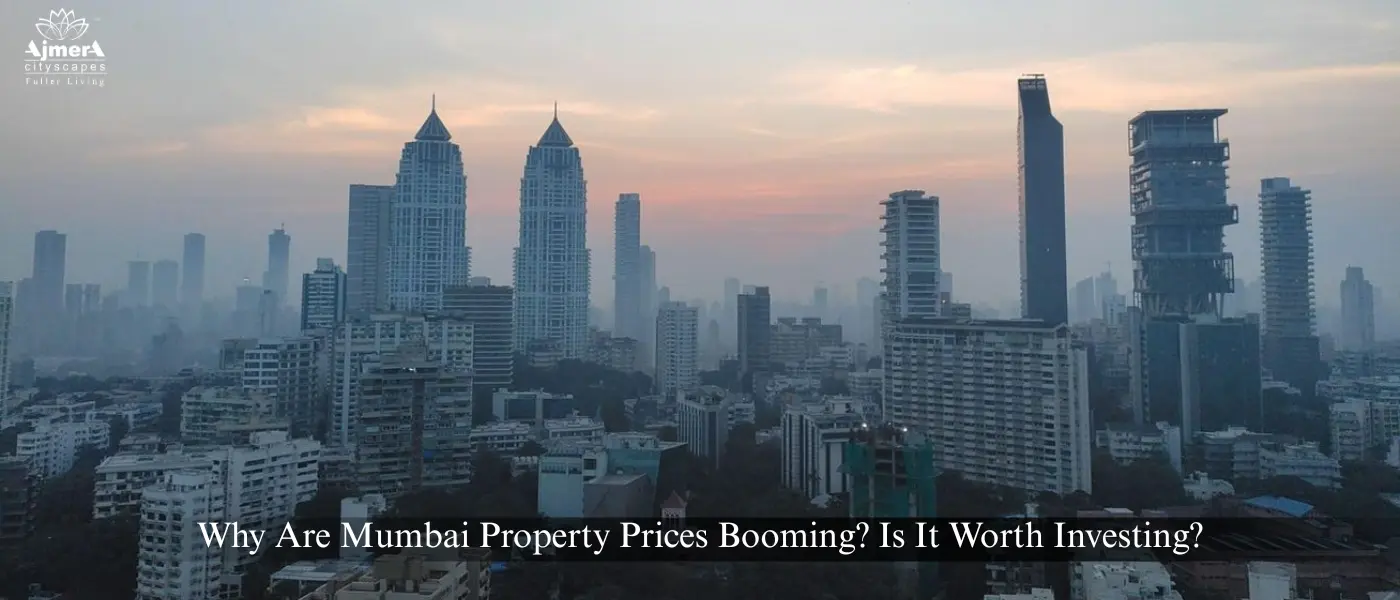
Over the last few years, Mumbai’s real estate market has transformed dramatically. There was a time when people confidently said, “Let’s wait for property prices to come down.” Fast forward to now, expectation of a price correction has completely vanished and we have shifted to a phase where affordability is shrinking faster than ever. Areas once considered budget-friendly have become premium investment zones, surprising buyers with the pace of this change. From luxury skyscrapers in South Mumbai to fast-growing suburbs and Navi Mumbai, property prices are rising across the city rapidly, making homeownership increasingly difficult even in previously accessible locations.
This sudden rise in prices has shocked many buyers, making them wonder whether they should invest now or wait and risk paying even more later. As demand continues to surge and infrastructure development pushes the city toward new growth and rapid development across the city, Mumbai’s real estate market is touching new highs. Because of this, one big question on everyone’s mind is why are Mumbai property prices booming so rapidly, and is it still worth investing in Mumbai real estate in 2026?
Mumbai’s real estate market has seen one of the sharpest price jumps in recent years. Locations that were once considered “affordable alternatives” are now becoming premium investment hotspots. Buyers who delayed their purchase decisions a few years ago are now shocked to see how dramatically Mumbai property rates have increased across Marine Lines, Vile Parle, Malad, Kandivali, Borivali and surrounding regions.
Here’s a quick look at how average property rates have evolved over the last decade:
| Area | Old Price (Approx. 2010) | Current Price (Approx. 2026) |
|---|---|---|
| Marine Lines | ₹28,000/sq.ft | ₹55,000/sq.ft |
| Vile Parle | ₹18,000/sq.ft | ₹38,000/sq.ft |
| Malad | ₹10,000/sq.ft | ₹24,000/sq.ft |
| Kandivali | ₹9,000/sq.ft | ₹21,000/sq.ft |
| Borivali | ₹11,000/sq.ft | ₹25,000/sq.ft |
One of the biggest reasons behind Mumbai’s property prices rising mainly due to rapid infrastructure development across the Mumbai Metropolitan Region (MMR), including metro expansions, coastal roads, trans-harbour links, and improved railway connectivity, which are boosting accessibility and demand in suburbs and Navi Mumbai. At the same time, limited land availability and a shortage of quality housing in prime locations continue to push prices higher, while strong investor confidence in Mumbai real estate as a long-term asset further increases demand from both investors and homebuyers.
The current boom in Mumbai’s housing market isn't a bubble, it is backed by solid macroeconomic and structural drivers. Several factors including infrastructure development, redevelopment projects, luxury apartments in Mumbai, investor activity, and limited land availability are driving Mumbai real estate growth in 2026. Let’s understand the key reasons behind this rapid appreciation.
A. Infrastructure Development Transforming Mumbai
One of the biggest reasons behind rising property prices in Mumbai is rapid infrastructure development. Major projects like the Mumbai Metro, Coastal Road, Atal Setu, Navi Mumbai International Airport, and new sea links are improving connectivity across the Mumbai Metropolitan Region (MMR). Areas like Navi Mumbai, Thane, Panvel, and distant suburbs are now becoming popular residential hotspots as travel time reduces significantly.
Better infrastructure directly increases property demand because buyers today prioritize connectivity, convenience and accessibility. Projects like the Atal Setu and expanding metro network are already boosting property values, while the upcoming Navi Mumbai Airport is expected to drive commercial growth, job creation, and future housing demand in nearby areas.
B. Mumbai’s Redevelopment Boom
Another major reason behind rising property prices in Mumbai is large-scale redevelopment. Since the city has very limited land for new construction, developers are focusing on rebuilding old societies and ageing buildings into modern high-rise towers.
In areas like South Mumbai, Bandra, Andheri, Kandivali and Ghatkopar, old structures are being replaced with new projects offering better space, design, and amenities. This shift is improving the overall skyline of Mumbai while also increasing Mumbai property values in these locations.
Redevelopment has also brought more premium and luxury flats in the Mumbai market. Modern projects now include better facilities and lifestyle features, which has increased buyer interest and pushed real estate growth higher across the city.
C. Rising Demand for Luxury Housing
Demand for luxury apartments in Mumbai has increased rapidly over the last few years After the pandemic, many homebuyers started preferring bigger homes (shifting preference from tight 1 BHKs to spacious 2 & 3 BHK configurations), better amenities, private spaces and comfortable living, which has boosted demand for luxury and high-end residential projects across Mumbai.
High-net-worth individuals, business owners, and professionals are actively buying properties in areas like South Mumbai, Bandra, Juhu, Worli, and Powai. Buyers are especially interested in sea facing flats in Mumbai. This Mumbai luxury real estate demand is driven not only by investment needs but also by lifestyle upgrades.
Today’s buyers are looking for sea views, modern amenities, gated communities, and well-designed living spaces beyond basic housing. This strong demand for luxury housing is one of the key reasons why property rates in Mumbai continue to rise.
D. Strong NRI & Investor Demand
Mumbai’s real estate market is seeing strong demand from NRIs and long-term investors. Many NRIs consider property in Mumbai a safe and stable asset that can grow in value over time, compared to more volatile investment options.
At the same time, domestic investors are also actively investing in Mumbai real estate for wealth creation. With rising rental demand, future capital appreciation potential, and ongoing infrastructure growth, Mumbai continues to remain a preferred real estate investment hub. This combined investor interest is further increasing demand for flats for sale in Mumbai in key areas of the city.
E. Limited Land Availability in Mumbai
Mumbai has very limited land for new construction, which creates a strong gap between demand and supply. As the city is geographically restricted, large-scale expansion is not possible, making available land extremely valuable. This creates a classic high-demand and low-supply situation.
Every year, thousands of people move to Mumbai for jobs, business opportunities, and better lifestyles, increasing demand for 1 BHK flat in mumbai and 2 BHK flat in mumbai continuously. However, with limited space available for new development, property prices naturally keep increasing, especially in prime locations. This scarcity factor makes Mumbai property highly valuable and is one of the strongest reasons why property prices maintain their upward trajectory year-after-year.
Mumbai’s real estate growth is uneven, with different micro-markets rising due to infrastructure, connectivity, and demand. Here are some key fast-growing areas:
Marine Lines
A prime South Mumbai location with strong demand due to its sea-facing apartments in Mumbai and central connectivity.
Why growing: Prime location, limited supply, high-end demand.
Explore: Ajmera Downtown, Marine Lines
Vile Parle
A well-established suburb with strong residential demand and proximity to the airport and business hubs.
Why growing: Connectivity, education hubs, stable residential demand.
Explore: Ajmera Shringaar, Vile Parle
Malad
One of the fastest-growing suburbs for buyers looking to buy a flat in Mumbai with better affordability and connectivity.
Why growing: IT hubs, metro connectivity, affordable luxury projects.
Explore:Ajmera Boulevard, Malad
Kandivali
A rapidly growing suburb with large-scale redevelopment and improving infrastructure.
Why growing: Metro line, redevelopment projects, better affordability.
Borivali
A mature suburb with strong demand for mid to premium housing and good green spaces and competitive 2 BHK in mumbai price.
Why growing: Metro connectivity, end-user demand, lifestyle balance.
The question many buyers and investors are asking is simple: is it still worth investing in the Mumbai real estate market in 2026, or have prices already peaked? The answer depends on your goals, time horizon, and risk appetite.
Pros of Investing in Mumbai Real Estate
1. Strong Long-Term Growth
Mumbai has shown steady property value growth over the long term as India’s financial capital.
2. Infrastructure Growth
Metro expansion, Coastal Road, Atal Setu, Navi Mumbai Airport, and sea links are improving connectivity and boosting demand.
3. High Rental Demand
Continuous inflow of professionals and students keeps rental demand strong across key locations.
4. Redevelopment Growth
Old buildings are being redeveloped into modern towers, increasing property value and supply of new homes.
5. Rising Luxury Demand
Demand for luxury flats in Mumbai is increasing, especially in areas like Marine Lines and Vile Parle.
1. High Prices
Mumbai is one of the most expensive real estate markets.
2. Interest Rate Impact
Home loan rates affect EMI and overall affordability.
3. Short-Term Price Fluctuations
Some areas may see slow growth or minor corrections in the short term.
End Users
For long-term living, buying a home is often a better option than paying continuously rising rents.
Long-Term Investors
Investors with a 7–15 year horizon can benefit from steady appreciation, especially in locations such as Malad, Kandivali, and Borivali.
For long-term living, buying a home is often a better option than paying continuously rising rents.
Rental Investors
Good for those seeking monthly income near business hubs and metro areas.
The future of Mumbai real estate is being shaped by infrastructure development, redevelopment projects, and growing demand for premium housing. Property prices are expected to continue rising, although growth will become increasingly location-specific and selective.
Expected Future Price Growth
Property prices are likely to increase further, particularly in well-connected micro-markets. Areas such as Malad, Kandivali, and Borivali may experience faster growth, while premium locations like Worli, Marine Lines, and Vile Parle are expected to witness steady appreciation.
Impact of Infrastructure
Major infrastructure projects including the Metro expansion, Coastal Road, Atal Setu, and Navi Mumbai International Airport are significantly improving connectivity and creating new growth corridors, which directly contribute to higher property demand and values.
Rise of Premium Housing Demand
Demand for larger homes, sea-view apartments, and luxury flats in Mumbai continues to grow. Modern buyers increasingly prefer spacious residences with lifestyle-oriented amenities and superior living experiences.
Smart City & Township Growth
Navi Mumbai is emerging as a major planned development hub. Integrated townships and mixed-use developments are redefining urban living and creating attractive investment opportunities.
Redevelopment-Led Growth
Due to limited land availability, redevelopment remains a key driver of Mumbai’s real estate growth. Aging buildings are being transformed into modern high-rise developments, improving infrastructure and enhancing property values.
Final Outlook
Mumbai is steadily moving toward premium, infrastructure-led, and redevelopment-driven growth. Despite high property prices, the city remains a strong long-term investment destination due to its economic importance, infrastructure expansion, and sustained housing demand.
Mumbai’s real estate market continues to expand due to strong buyer demand, increasing property registrations, infrastructure improvements, and limited land supply. Locations such as Malad, Kandivali, Borivali, and Vile Parle are witnessing significant growth because of better connectivity and relatively affordable pricing, while premium destinations like Marine Lines continue to attract luxury homebuyers and investors.
Industry experts believe Mumbai property prices are increasing because demand is growing faster than supply. Since most new developments occur through redevelopment projects, supply remains constrained in prime areas. Strong rental demand, future infrastructure projects, and long-term appreciation potential continue to support positive investor sentiment in Mumbai real estate.
The future of Mumbai real estate is increasingly location-specific, premium-focused, and infrastructure-driven. Areas such as Marine Lines, Vile Parle, Malad, Kandivali, and Borivali are expected to remain attractive for both homebuyers and investors. While affordable property opportunities have become limited, Mumbai’s position as India’s financial capital ensures that strategic real estate investments made in 2026 can continue to generate substantial value over the long term.
This growth is supported by major infrastructure projects, redevelopment activity, increasing demand for luxury apartments, NRI investments, and limited land availability. Whether you are looking for a 1 BHK, 2 BHK, or 3 BHK flat in Mumbai, or premium sea-facing apartments, the city offers options for every type of buyer. Mumbai real estate continues to provide strong long-term appreciation potential, healthy rental demand, and attractive investment opportunities, particularly in growth-oriented locations such as Malad, Kandivali, and Borivali.